
ABOUT THE INNOVATOR
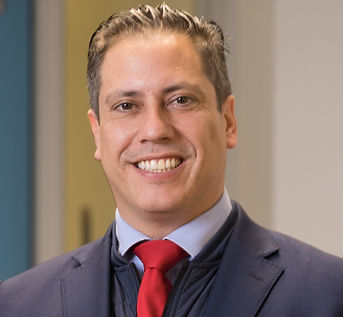
Dr Juan F Martín-Lázaro
MD · PhD · INTENSIVE CARE · CLINICAL BIOCHEMISTRY · INNOVATION
A clinician, scientist and innovation leader whose work connects high-consequence healthcare, biochemical reasoning, institutional delivery and the disciplined translation of early-stage ideas into testable engineering systems.
PROFESSIONAL FOUNDATION
A career built around complex systems where evidence and execution both matter.
CLINICAL
Intensive Care Consultant
Consultant in Intensive Care Medicine at Newham University Hospital, Barts Health NHS Trust, with leadership in research, tracheostomy care and clinical education.
SCIENTIFIC
MD, PhD and Clinical Biochemist
A biochemical pathology foundation and doctoral research in cardiovascular risk factors underpin a mechanism-led approach to biological and materials problems.
ACADEMIC
Innovation and medical education
Associate Professor of Innovation at the University of East London and Senior Lecturer at Queen Mary University of London, linking applied innovation with professional education.
EXECUTIVE
Healthcare delivery at scale
Former senior executive and medical leader in private hospital development, followed by healthcare-logistics consultancy supporting major new-hospital programmes.
FROM CLINICAL OBSERVATION TO ENGINEERING HYPOTHESIS
Why DISE?
DISE applies a familiar biological principle: separate transport from activation. Inspired by platelet behaviour, the platform is designed to remain fluid during delivery and transform only after reaching the target environment.
Dr Martin developed the integrated concept, analytical framework and staged validation programme. DISE is currently positioned at TRL 3, transitioning towards TRL 4. Its quantitative performance values remain qualification targets—not completed experimental claims.

PROPOSED DEVELOPMENT ENVIRONMENT
London Sustainable Materials Lab
The University of East London’s London Sustainable Materials Lab brings together materials characterisation, processing and performance-testing capabilities relevant to the planned DISE TRL 3→4 programme. The facilities shown below illustrate the type of institutional environment required for disciplined formulation screening and particle qualification.

Particle morphology, surface condition and elemental analysis.

Chemical conversion, residual functionality and compatibility screening.

Load response, deformation and comparative material qualification.
Laboratory photographs: University of East London, London Sustainable Materials Lab. DISE is an independently developed proposal for collaborative validation; inclusion of these facilities does not imply institutional endorsement or that DISE testing has already been completed at UEL.
A deliberately multidisciplinary approach
DISE sits at the intersection of radical polymerisation, interfacial science, suspension rheology, HPHT transport, particle mechanics and fracture conductivity. Its development philosophy is correspondingly rigorous: expose the weak assumptions early, define pass/fail gates, and advance only when the integrated evidence supports the next readiness level.

